I watched the movie, Chocolat, several years ago, so I recently decided it was time to read the book. Perhaps I wasn't paying close enough attention when I watched the movie, but I expected something very different when I sat down to read the book. I expected the book to be more... romantic, sensual... Instead I found it to be an exploration of the effects of intolerance. Harris takes the intolerance so rife in our world and concentrates it in one small community showing how limiting we can be when we refuse to see beyond that which we've always been taught. She deftly explores the effects of exclusionary behavior and the harm of not bothering to get to know other people. With the story set around a newcomer who opens a chocolate store during Lent and the priest who opposes not only the chocolate shop but her mere presence, the town seems divided down the middle with people willing to blind themselves to other people's pain in order to maintain the status quo of their lives. I'm not sure the book was intended to make me feel sad, but it often did because it so aptly displayed how divisive human beings can be toward one another while wrapping their judgment up in a warped version of religious righteousness or even concern. Chocolat is a thought-provoking, entertaining book with characters that touch the heart and take up residence in one's imagination.
Sunny Frazier always delights, and A Snitch in Time is no exception. She writes the Christy Bristol series in a way that feels lighthearted even in its darkest moments. When Bristol goes on vacation to visit her friend, Lennie, she never expects to get drafted into working for a different department doing her job. Bristol is intrigued enough by the crime at hand that her protestations seem half-hearted at times though her annoyance is very real. When she and Lennie get into a fight, she's left with nothing but the work the department expects her to do. Frazier drops the reader in the Sierra Nevada Foothills creating a sense of isolation that makes the reader cheer for Bristol to stand up to her superiors and get out of there while simultaneously wanting to her to solve the crime. When a witness contacts Bristol via phone she doesn't take her seriously at first only to discover she might have vital information. With suspicion cast in multiple directions, Bristol isn't sur...
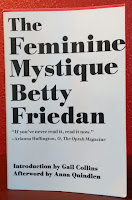
I wanted to love The Feminine Mystique by Betty Friedan. I picked it up with expectations of being inspired, of being enraged, of being enlightened... I was convinced this book would turn me into a militant feminist; okay not really, but I thought it would somehow change my relationship with feminism, answer questions I'd never thought to ask, radically change my life... In that, I think perhaps my expectations were too high. It is an important book. It is well written, and Friedan makes her points quite convincingly. As a way to understand the foundation of modern feminism, I highly recommend it. That said, I found myself reminding myself that some of the research she cites is outdated, has been proven incomplete and, at times, inaccurate while grimacing that we are facing some of the same battles yet again - or perhaps still. As I read The Feminine Mystique it became very clear to me that equality, at least for women, seems to wax and wane. Progress is made, then fear, miscon...
SpiritChili: Recipes for Life by Tony Haynes feeds the reader's spirit with poetic vision. The beautifully written poems explore the myriad aspects of life that guide people toward growing into their best selves. Haynes shares his faith through his poetry that is thought provoking and inspiring. Haynes plays with words in twists and turns that surprise, delight, and enthrall while bringing the reader to new understanding of self and others. With its focus on love, hope, and the shared human experience, SpiritChili adds a little spice to life.


Comments
Post a Comment